
Castells, the human towers that hold Catalonia together
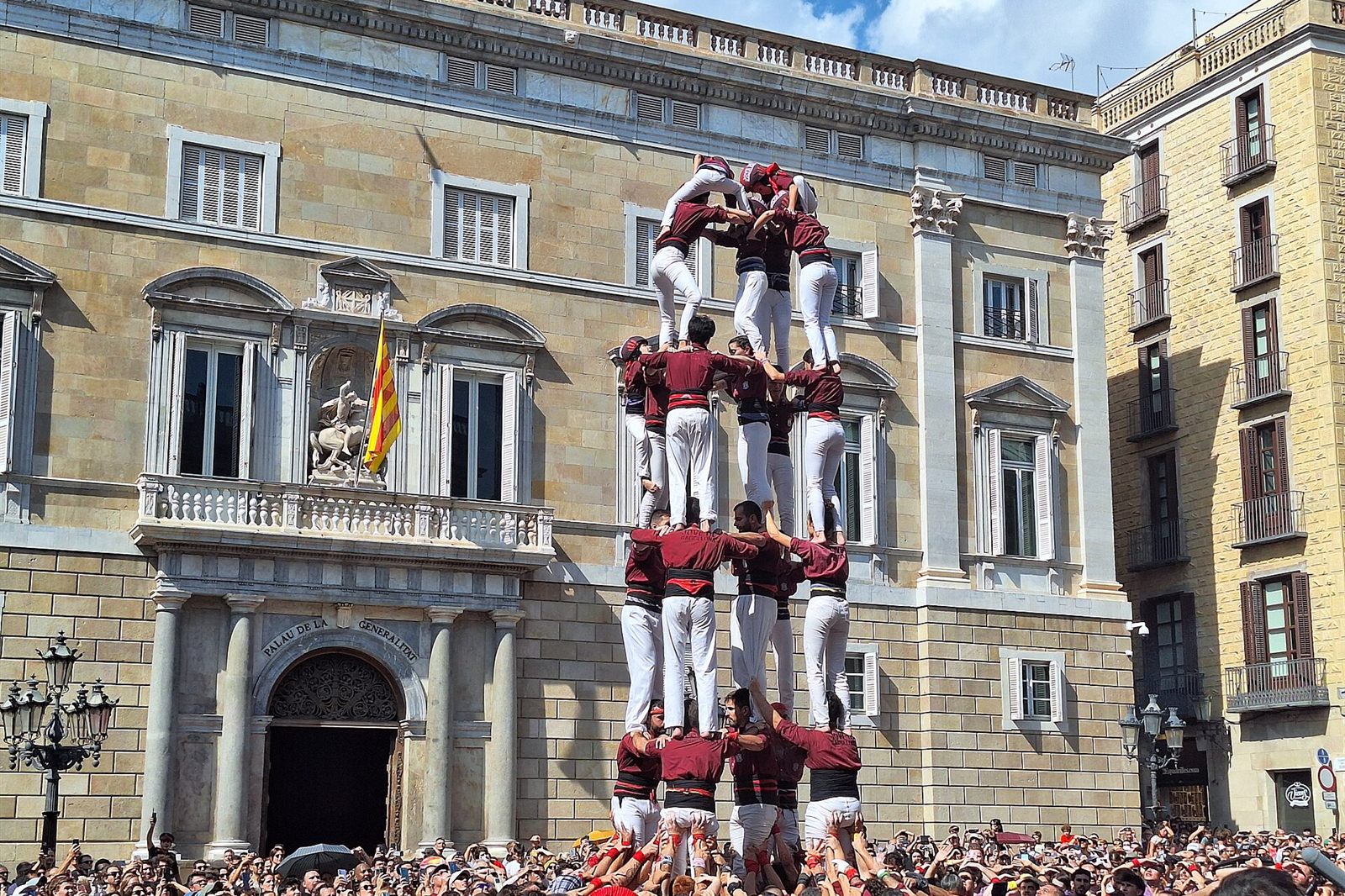
Picture a packed village square. The music of the gralles begins. In the middle, dozens of people press tightly together, arms raised. Then, storey after storey, men and women climb onto each other’s shoulders, until a child at the very top raises one hand. The square erupts. You’ve just seen a castell.
A tradition born in Valls
Castells were born at the end of the 18th century in Valls, near Tarragona, out of a folk dance that ended with a small human tower. Little by little, the towers grew taller than the dance, and the tradition spread across southern Catalonia, then the rest of the country.
Today there are around a hundred colles castelleres, castell teams, from Barcelona to Lleida, from Girona to Perpignan. In 2010, UNESCO added castells to its list of the Intangible Cultural Heritage of Humanity.
How a castell stays up
A castell is living architecture. Every part has a name and a job.
- The pinya, the base: dozens, sometimes hundreds, of people packed together on the ground. They take the weight and, above all, cushion the fall if the tower collapses. Anyone can join in, even a visitor.
- The tronc, the trunk: the middle storeys, made up of adults holding each other by the shoulders. Castells are named by the number of people per storey and the number of storeys: a 3 de 9 has three people per storey, nine storeys high.
- The pom de dalt, the crown: the lightest storeys, made up of children. The last one, the enxaneta, climbs to the very top and raises one hand, making l’aleta, like a wave. That’s the signal: the castell is “loaded”.
But it hasn’t succeeded yet. Now everyone has to climb back down without the tower falling. A castell is only descarregat, fully completed, once the last casteller has set foot back on the pinya.
The greatest castells reach ten storeys, with extra rings of support around the trunk, the folre and the manilles. Only a handful of teams can manage it.
Strength, balance, courage and common sense
The castellers’ motto fits in four words: Força, equilibri, valor i seny. Strength to carry, balance to hold, courage to climb, and seny, a very Catalan word meaning common sense, wisdom and good judgement all at once.
What strikes you most is that everyone has a place. The banker next to the student, the grandmother cheering in the pinya, the seven-year-old climbing to the top in a helmet. All castellers wear the same outfit: white trousers, a shirt in the team’s colour, and the faixa, a long black sash that protects the back and gives climbers something to hold on to.
Where to see them
Castells are mostly built during village festivals, from June to November. A few dates to remember:
- Sant Fèlix, in Vilafranca del Penedès, on 30 August;
- la Mercè, in Barcelona, at the end of September;
- Santa Tecla, in Tarragona, at the end of September;
- Santa Úrsula, in Valls, the birthplace of castells, in October;
- and every two years, in early October, the great Concurs de Castells in Tarragona, where the best teams compete.
A tip: arrive early, stand near the pinya, and when the music changes, look up. You won’t forget it.
Castell words
- fer pinya: to pull together (literally and figuratively!)
- l’enxaneta: the child who crowns the castell
- carregar / descarregar: to load / to complete
- Visca!: hooray! (what people shout when a castell succeeds)
The phrase fer pinya has made its way into everyday language: people use it to mean sticking together, helping each other out. That’s no coincidence. In Catalonia, castells are much more than a sport. They’re a way of living together.
Photo: a castell in Plaça Sant Jaume during La Mercè 2024, by Pere López Brosa (CC BY-SA 4.0, Wikimedia Commons).